Decking Installation in Lincolnshire: What to Expect and How to Prepare Your Garden
Planning decking installation in Lincolnshire or Newark? We build timber and composite decks that transform gardens. Get a free quote from ADF Outdoor Solutions.

Decking That Actually Suits Your Garden and Your Life
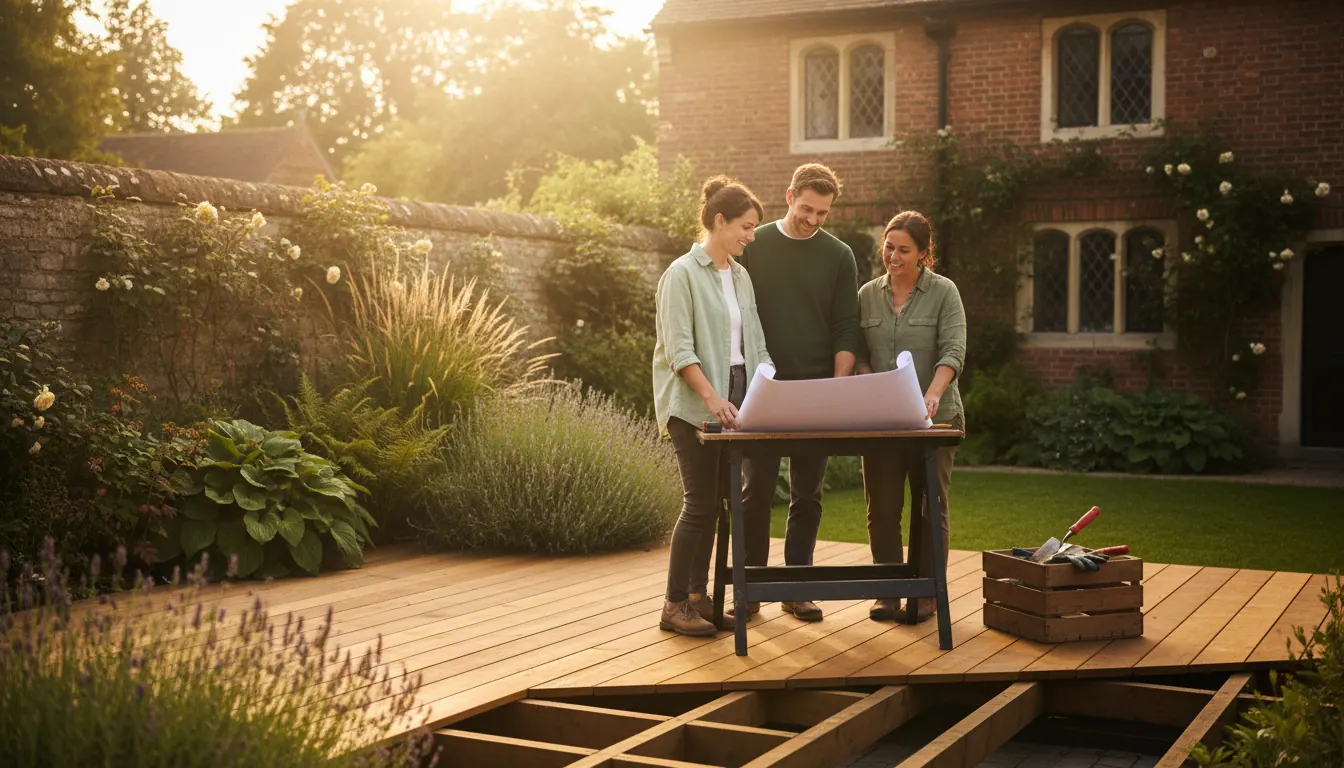
A well-built deck changes how you use your outdoor space. It gives you somewhere to sit on a summer evening, a defined area for the kids to play, a spot for the barbecue that does not turn into a mud bath after the first bit of rain. Across Lincolnshire and Nottinghamshire, we have seen just how much a thoughtful decking installation can lift a garden that previously felt flat or unloved.
If you are weighing up your options, our guide to patio vs. decking covers the key differences in a straightforward way and might help you decide before you even pick up the phone.
This article focuses on what you actually need to know about decking installation in Lincolnshire and the wider Newark area: the material choices, what the process involves, and how to make sure the result lasts.
Timber or Composite: Choosing the Right Decking Material
This is the first question most homeowners ask us, and the honest answer is that both work well when they are installed properly. The choice depends on your garden, your lifestyle and how much time you want to spend on upkeep.
Timber decking has a natural warmth that is hard to replicate. Pressure-treated softwood is the most common choice for residential gardens across Newark, Southwell and the surrounding villages. It takes stain and paint well, it feels solid underfoot, and when it is laid and finished correctly it looks genuinely beautiful. The trade-off is that timber does need periodic maintenance. Left untreated, it will grey off, crack and eventually become slippery with algae.
Composite decking is engineered from a blend of wood fibre and plastic. It does not rot, it does not splinter, and it requires very little upkeep beyond an occasional clean. For families in Fernwood, Coddington or Farndon who want a deck they can simply enjoy rather than maintain, composite is often the right call. The surface options have improved enormously in recent years and a good composite board looks far more natural than it once did.
A few things worth thinking about:
- Sun and shade. Timber can warp in very exposed spots. Composite holds its shape better in direct sun and heavy shade alike.
- Slope and drainage. Both materials need a properly constructed subframe with adequate fall so water drains away cleanly. This is something we always get right before a single board goes down.
- Colour and finish. Timber can be stained to almost any tone. Composite comes in a fixed range of colours, so it pays to see samples in your actual garden before committing.
What a Decking Installation Actually Involves
There is more to a deck than screwing boards onto a frame. The longevity of any decking installation in Lincolnshire or Nottinghamshire depends almost entirely on what happens before the boards go on.
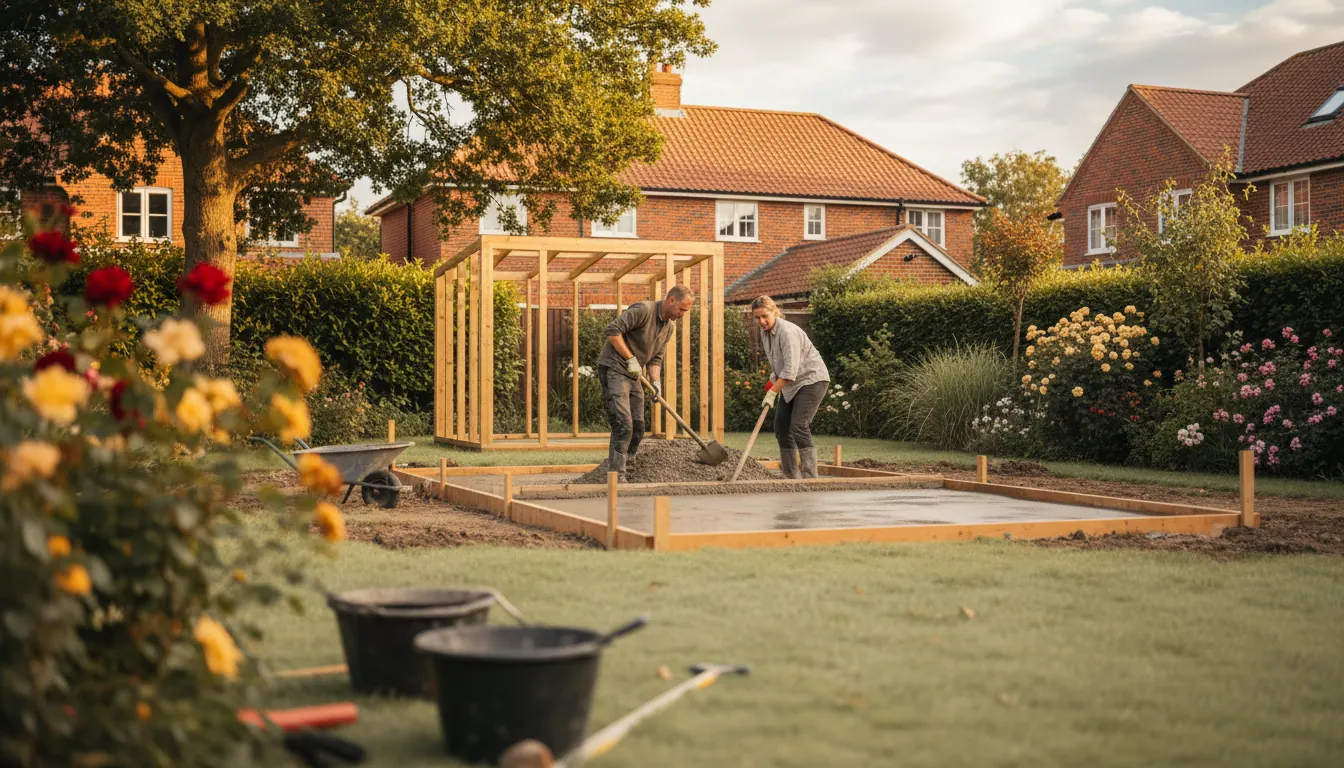
Ground preparation is the foundation. We clear the area, address any drainage issues and, where the deck is raised or the ground is soft, we install concrete pads to support the posts. Getting this right prevents movement and rot further down the line. If you are interested in how we approach concrete bases more generally, our guide to preparing a concrete base for garden buildings gives a good sense of the care that goes into groundwork.
The subframe carries the whole load. We use treated timber joists and posts, spaced correctly for the board material being used. A subframe that is undersized or poorly spaced will flex, creak and eventually fail.
Board laying and fixing. Boards are fixed with the correct gaps to allow for expansion and drainage. We use hidden fixings where possible for a cleaner finish, particularly with composite. Every cut end on timber gets a treatment application to prevent moisture ingress.
Finishing. For timber decks, we apply a quality treatment before we leave. It is also worth knowing that an annual clean and re-treatment is the single best thing you can do to extend a timber deck's life.
Keeping Your Deck Looking Good
Once your deck is down, a little regular care goes a long way. Composite decking needs the least attention, but even a composite surface benefits from a good jet wash once or twice a year to prevent algae and grime building up in the grooves.
Timber decks need a bit more. An annual clean, ideally in spring once the worst of the winter damp has passed, followed by a fresh coat of decking oil or stain, will keep the boards looking good and prevent the surface from becoming slippery. If you are unsure how often to clean outdoor surfaces, our article on patio jet washing covers the principles well, and much of it applies equally to timber decking.
What Our Customers Say
Communication and care throughout the job matter as much as the finished result. Nicole, one of our customers, put it well:
MGC have been amazing from start to finish. Checking in to make sure I was happy with every step, sending photo updates and nothing was ever too much hassle. Would highly recommend to everyone, I've already got a second job lined up for him now the first one is complete. Thank you so much!
That approach, keeping you in the loop, checking in at every stage and making sure the finish is right before we leave, is exactly how we work on every decking project across Lincolnshire and Nottinghamshire.
Decking Ideas for Lincolnshire and Nottinghamshire Gardens
Gardens across this part of the country vary enormously. A terraced house in Balderton has very different requirements to a large plot in Collingham or a rural property near Sutton-on-Trent. Here are a few ideas that tend to work well in the gardens we visit:
- Wraparound decking for corner plots or properties where the garden wraps around the house. Gives you a usable space on multiple sides.
- Split-level decks where the garden slopes. Rather than fighting the gradient, a two-level deck can make a sloping plot feel intentional and interesting.
- Decking as a dining area positioned to catch the evening sun. In many Newark-area gardens, the best light falls at the far end of the plot, away from the house.
- Decking around a garden building. A small platform outside a summer house or studio makes it feel like a proper room rather than a shed at the bottom of the garden.
Frequently Asked Questions About Decking Installation
What is the difference between timber and composite decking installation in Lincolnshire? Timber decking uses natural wood boards, typically pressure-treated softwood, laid over a treated timber subframe. Composite decking uses boards made from a mix of wood fibre and plastic. Both require the same quality of groundwork and subframe construction. The main practical difference for homeowners is that composite needs far less ongoing maintenance than timber, while timber tends to have a warmer, more natural appearance.
How long does a decking installation take? Most residential decking projects take between one and three days depending on the size, the complexity of the subframe and whether any groundwork is needed first. We will give you a clear idea of the timeline when we come to quote.
Does my garden need any preparation before decking can be installed? Yes, and this is something we handle as part of the job. The ground beneath the deck needs to be cleared, levelled where necessary and, for raised or post-supported decks, concrete pads need to be in place before the subframe goes up. Skipping this preparation is the most common reason decks fail early.
Can decking be installed on a sloping garden in Nottinghamshire or Lincolnshire? Absolutely. A sloping garden is actually one of the best candidates for decking because a raised deck can create a level, usable surface without the need for extensive ground levelling. We assess the slope during our site visit and design the subframe height and post positions accordingly.
Ready to Talk About Your Decking Project?
If you are thinking about decking installation in Lincolnshire, Newark-on-Trent or anywhere across Nottinghamshire, we would love to hear about your garden. The best way to get the ball rolling is to send us a few photos through our quote form so we can get a feel for the space before we visit.
Call us on 07940 769083, email us at Mowtivatedgcltd@gmail.com, or get in touch through our contact form and attach a photo or two of your garden. We cover Balderton, Collingham, Southwell, Fernwood, Coddington, Farndon, Sutton-on-Trent and all the surrounding areas, and we are always happy to come and take a look.